ADVOCACY
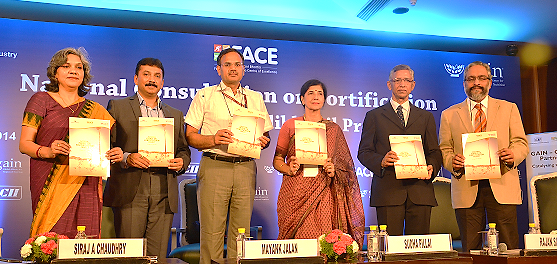
(L to R) : Ms Anuradha Prasad, JS, Ministry of Food Processing Industries (MoFPI), Mr. Siraj Chaudhury, Chairman, Cargill India Ltd, Mr J P Meena, Additional Secretary, MOFPI; Ms. Sudha Pillai, Former Member Secretary, Planning Commission of India, Dr Rajan Sankar, India Country Manager, GAIN and Dr. Ambrish Mithal, Chairman & HOD, Division of Endocrinology and Diabetes, Medanta, at the launch of National Edible Oil Fortification Project
Key Takeaways from Advocacy
- Voluntary vs Mandatory Fortification: Food fortification should be voluntary only and not mandatory, as voluntary fortification will help build a competitive differentiation as a business strategy.
- Developing Standards: Currently standards for fortifying food with required vitamins and minerals exist only for limited foods like atta and maida. Creation of standards and protocols on oil fortification is required to determine the minimum dosage of micronutrients in edible oil as the vitamin stability varies across oils.
- Logo depicting the food is fortified – In India, a large sector of population is uneducated and often not aware about the claims and labeling on food packs. To differentiate fortified from non-fortified foods, a logo can be used which can be identified and understood by all.
- PDS and Mid-Day Meal Scheme is identified as an effective mechanism to address malnutrition among children across states. For fortification to be effective, it is imperative that it reaches the vulnerable section of the society through Government managed social safety net programs. This can only be attained through continued dialogue with the state governments and convincing them about the benefits of working in a public private partnership mode.
- Integrating Nutrition and Health Programs: Child and maternal malnutrition rates, including micronutrient malnutrition are at very high levels and is increasing over the years. There lies the need for a stronger political will, policy implementation framework and industry participation to promote large scale food fortification. It is important that integrate nutrition and health program give due importance to sanitation and hygiene.
- Consumer Connect: Creating awareness among the consumers about food fortification through consumer awareness campaigns executed by agencies working with consumers, and engaging relevant Ministries, nutrition experts and think-tanks to bring clarity and build confidence among consumers on the benefits of consuming fortified foods.
- Sustained Efforts: To make this Intiative impactful and retain the momentum, it is imperative to sustain these efforts through a continuous mechanism of engagement with all stakeholders. Thus a Resource Centre on Nutrition was established under the Swasth Bharat Sashakt Bharat Campaign.
Launch of Kick Off Consultation
The National Edible Oil Fortification Project was formally launched in New Delhi on 1st August 2014 by
Ms. Sudha Pillai, Former Member Secretary, Planning Commission of India. A Panel discussion moderated by NDTV was also organized parallel to the launch ceremony, aimed at creating a multistake holders platform for building consensus on edible oil fortification.
The Panel discussion provided useful insights on various aspects of nutrition and Food Fortification was identified as a complementary strategy to combat micronutrient malnutrition. It has a great potential of enriching the nutritional quality of food and in turn, enriching the life of millions of children; by giving them a healthy start to life which they rightly deserve. All that is required is a nationwide campaign to create awareness on benefits and necessity of fortification, implement and scale it up. It was well received that, as a business opportunity fortification creates competitive differentiation for the company. Vegetable oil is one of the best vehicles for fortification. Adoption of voluntary fortification of Edible oil as an Industry norm would go a long way in improving the health of all, educability of children, and work performance and productivity in adults; which would enhance their earning potential.
Stakeholders Consultation on Food Fortification
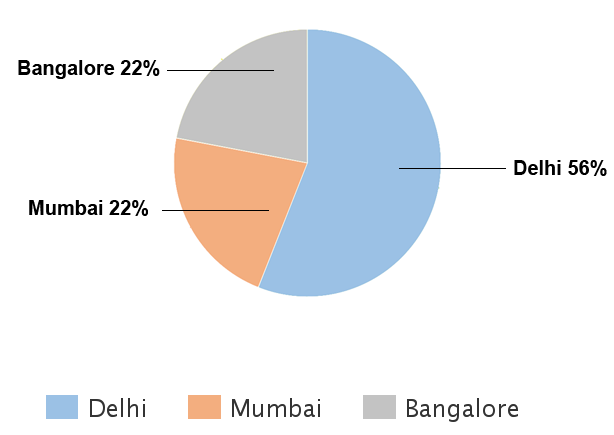
Appropriate advocacy and business platforms were created with key stakeholders relevant to edible oil sector to champion the significance of edible of fortification in India, focusing on market led solutions. National and state level programs were organized across the country. States like Maharashtra, Karnataka and Uttar Pradesh were identified and workshops/high level meetings were conducted in Mumbai, Bangalore and Lucknow respectively to advocate the merits of fortification of staple foods as a complementary strategy for addressing micronutrient deficiencies.
Key learnings from successful models of food fortification operational in Madhya Pradesh and Rajasthan were shared to build on the confidence of consumers and set an example for other states to adopt fortification as a complementary strategy to combat micronutrient malnutrition India. Stakeholder from government, industry, science community, and consumer organizations participated and expressed their willingness to participate and contribute towards this initiative.
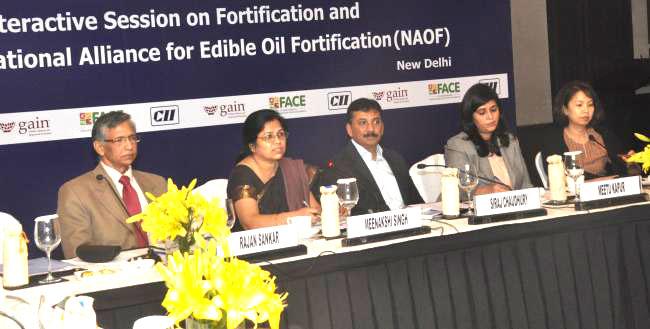
Interactive Session on Fortification and Meeting of the National Alliance
for Edible Oil Fortification
(L to R) : Dr.Rajan Sankar, Country Manager India and Senior Advisor, South Asia, GAIN Dr.Meenakshi Singh, Scientist (Standards), FSSAI Mr.SirajChaudhury, Chairman, Cargill India Ltd. Ms.Meetu Kapur, Executive Director, Confederation of Indian Industry Dr.Jee Rah, Nutritionist, UNICEF
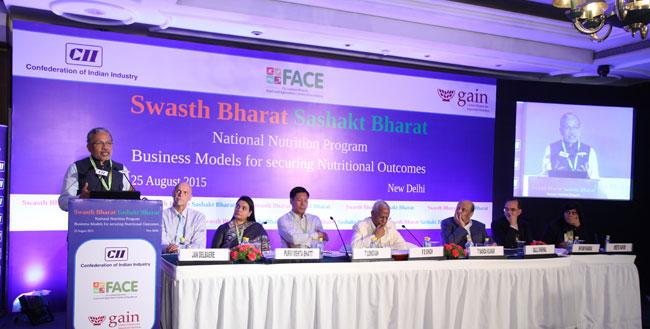
Mr T Nanda Kumar, Chairman, National Dairy Development Board (NDDB) and Former Secretary, Ministry of Agriculture was the Chief Guest on the occasion which was also presided over by, Dr R B Singh, Past President, National Academy of Agricultural Sciences among others.
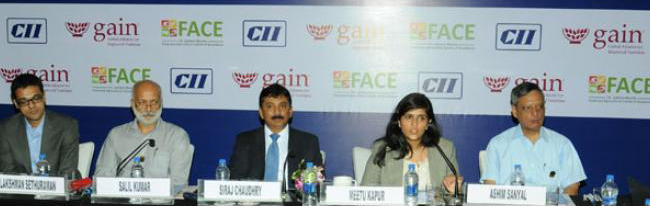
(L to R) : Mr. Lakshman Sethuraman Senior Manager, Tata Trust Mr. Salil Kumar Manager- India operations Global Alliance for Improved Nutrition Mr. Siraj Chaudhry Chairman National Alliance on Oil Fortification & Chairman, Cargill India Ltd. Ms. Meetu Kapur Executive Director, Confederation of Indian Industry Mr. Ashim Sanyal COO Voluntary Organization in the Interest of Consumer Education
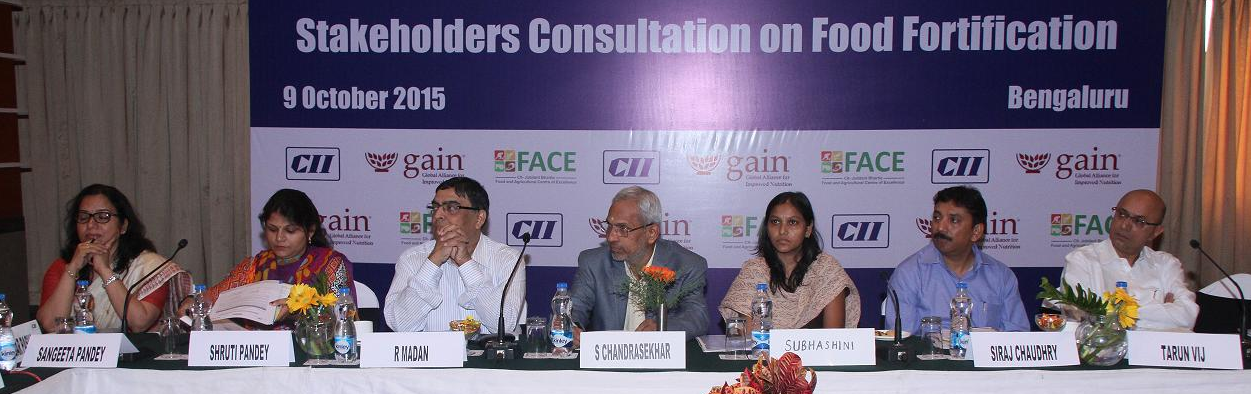
(L to R) : Dr Sangeeta Pandey, Head of the Department, Nutrition, Mount Carmel College, Dr Shruti Pandey, Scientist, CFTRI, Mr Madan Kumar, CFO, Akhya Patra, Mr. S Chandrasekhar, Past Chairman CII Karnataka & MD - Bhoruka Power Corporation Ltd., Mr. Siraj Chaudhry, Chairman National Alliance for Edible oil Fortification & Chairman - Cargill India Pvt. Ltd, ;Ms Subhasini, Manager, Public Distribution System, Government of Karnataka and Mr. Tarun Vij, Country Manager India operations, Global Alliance for Improved Nutrition
Stakeholders Participation